Showing posts with label centers. Show all posts

Using Morning Tubs in Your Homeschool Routine: Creative Ideas for Maximum Value

Using Morning Tubs in Your Homeschool Routine: Creative Ideas for Maximum Value

Morning tubs aren’t just for traditional classrooms—they can be a game-changer for your homeschool! These versatile, hands-on activities are perfect for engaging your kids at the start of the day, keeping learning fun and flexible. If you’ve never used morning tubs before, let me show you how they can become one of your favorite tools in homeschooling, especially when you’re looking for ways to reuse resources for maximum value.


What Are Morning Tubs?

Morning tubs are sets of activities designed to kick off the day with engaging, meaningful tasks. They’re often hands-on and cover a range of subjects like math, reading, writing, or fine motor skills. Instead of jumping straight into formal lessons, kids ease into the day with these enjoyable activities.

 The 2nd Grade Morning Work Tubs for February from my Teachers Pay Teachers store is a great example—they’re filled with themed activities that are educational and fun!

Why Use Morning Tubs in Your Homeschool?

Here are some reasons why morning tubs are a perfect fit for homeschooling:

  1. Independent Work Time: While your kids are busy with morning tubs, you can take a few moments to prepare for the day or work one-on-one with another child.
  2. Flexible Learning: Morning tubs can be tailored to your family’s schedule and educational goals, whether you want to focus on math, literacy, or fine motor skills.
  3. Reusable Resources: The activities in these tubs can be used multiple times and in different ways, making them an excellent investment.


How to Use Morning Tubs at Home

Here are several ideas for incorporating morning tubs into your homeschool routine:

  1. Start the Day with Fun Learning Begin your day with morning tubs to set a positive tone. The February-themed tubs include activities like sorting, matching, and problem-solving—all designed to build foundational skills while feeling like play.

  2. Pair with Themed Learning Units If your February lessons include topics like winter, Valentine’s Day, or kindness, use the tubs as an extension. For example, math activities from the tubs could reinforce counting or pattern-making, tying directly into seasonal themes.

  3. Rotate for Multi-Use Don’t use all the activities at once! Rotate them weekly to keep things fresh. What’s great about these tubs is that they’re reusable year after year, so the activities can reappear in future lessons for reinforcement or as a fun review.

  4. Use for Transition Times Morning tubs are ideal for filling gaps in your schedule. If you’re transitioning between subjects or need to keep one child busy while helping another, these tubs are a lifesaver.

  5. Incorporate with Siblings Morning tubs aren’t just for one child! Many activities can be adapted for different ages. Younger kids can join in with simplified tasks, while older siblings might enjoy “helping” by explaining concepts.

  6. Supplement with Family Challenges Turn the activities into mini-competitions or family challenges. For example, who can finish the math puzzle fastest? This adds an element of excitement and encourages critical thinking.


Maximize the Value of Morning Tubs

One of the best things about morning tubs is their reusability. Here’s how to make the most of them:

  • Laminate Activities: Laminating task cards or sheets ensures they’ll last longer. Use dry-erase markers to make them reusable.
  • Store for Future Use: Pack tubs away after February and bring them out the next year for a fresh start.
  • Repurpose for Other Subjects: Many activities, like matching or puzzles, can be repurposed for a variety of subjects, from science vocabulary to geography.

Ready to Get Started?

If you’re excited to bring morning tubs into your homeschool, check out my Morning Tubs on Teachers Pay Teachers. They’re packed with fun, seasonal activities that you can use again and again. Whether you’re new to morning tubs or looking for fresh ideas, these resources are sure to add joy and flexibility to your homeschooling days.


Do you use morning tubs in your homeschool? I’d love to hear your favorite ideas or adaptations in the comments below!

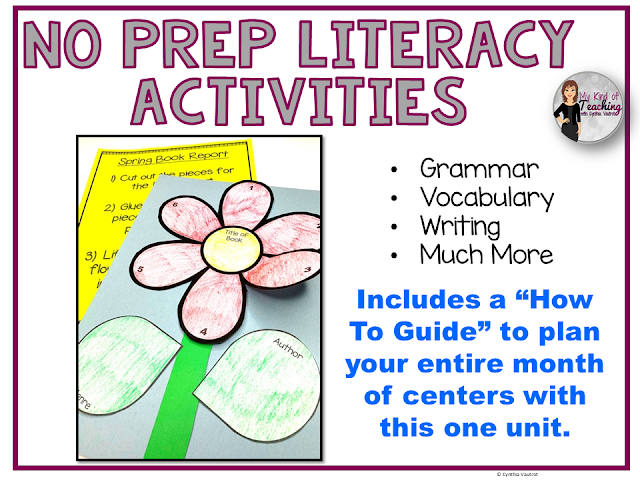
Frequently Asked Questions About NO PREP Literacy Centers

If you have questions about NO PREP Literacy Centers, I have the answers!!


Q: How do I design effective literacy centers for the elementary classroom?

A: You can include anything in literacy centers that fit your students’ needs. You can use items that you are currently teaching as well as review ideas. Literacy centers should be a time for students to practice a concept to improve. 


Q: What grade levels are these No Prep Literacy Centers designed for?

A: These easy literacy centers with no prep activities have been specifically designed for second, third, or fourth grade classrooms.


You can see my second-grade units here.

You can see my third-grade units here.

And the fourth-grade units here.


Q: Are these units aligned with any state standards?

A: No, these no-prep literacy activities are not aligned with any state standards or curriculum. The units are designed to cover the skills most commonly taught in the designated grade level, so most teachers find these easy literacy centers very helpful.


Q:  What is special about these NO PREP Literacy Centers?

A:  These literacy centers were created with the busy teacher in mind. No Prep saves you time by making lesson planning and setting up your centers a breeze, as they are just print-and-go!


Q: What is included in each monthly unit?

A: These monthly units are jam-packed!


Each monthly unit includes:

  • Literacy Centers that are print and go.
  • Bonus activities 
  • Direction Posters for students to follow to free you from having to explain.
  • Detailed information telling how I use literacy centers in my classroom.
  • Ideas of how to conduct intervention groups while other students are in centers.
  • The year-long bundle includes a guide to the literacy skills and concepts covered for the entire year, along with the month(s) in which you can find them.


Q: Can these literacy centers help struggling readers?

A: There is a detailed “How to Use” information guide included. This will explain how to set up centers in your classroom so that you have more time to work with your struggling readers in an intervention group during the center time each day.


Q: Are answer keys included?

A: Yes! Answer keys are included!

Q: How long does it take to complete these activities?

A: Most of these literacy centers can be completed in one daily literacy rotation. However, sometimes there are activities included that are meant to be used for two weeks.

Q: What makes these centers “NO PREP”?

A: These units do not include color ink. Instead, color can be brought by printing the directions on color-copy paper. Any required cutting is all straight lines for easy and fast cutting. (Consider letting students do the cutting.) There is no need to laminate and prepare weeks in advance. Print, go, and use today!


Q: How do I store these units?

A: You have options with these centers! Simply throw everything away after using it and print again next year. Of course, if you prefer to save, you can choose to laminate it and keep it to use again during the year or next year.


Q: Can I use these no-prep literacy center activities more than once?

A: Yes! These centers can be used throughout the year. They are perfect for intervention, enrichment, review, and more!


Q: What are some printing options?

A: There is no color ink used in these NO PREP units. Just print and go on your choice of white copy paper or colored copy paper.

Q: How will these NO PREP LITERACY CENTERS help ME?

A: Included is a “How to Use” detailed information that explains how to use only five ELA centers each week, how to implement themwhat to use in the centers, and how to keep those same five titled centers for the entire year to ensure that you have easy centers that work for you!


This setup makes planning and prepping so very simple, meaning you can leave the classroom on time each day to have more time to spend on your personal life and with your family!


And that my friends is just...
My Kind of Teaching!

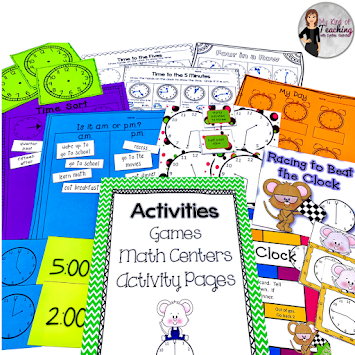
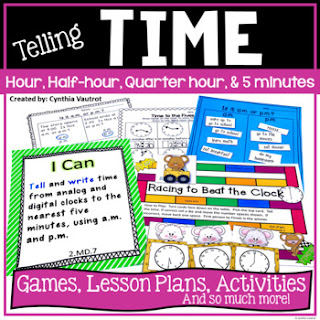
Fun Activities to Teach Telling Time

Time is one of those lifelong skills that we have the honor of teaching. It's something that we use all day, every day, and is necessary to be successful in life. The art of telling time on an analog clock can easily become extinct with all of today's technology and digital options. So, it's up to us to continue teaching our students how to tell time on every clock available. Here are some fun activities to teach telling time in your classroom.

These telling time activities are perfect for students in 2nd through 3rd grade who are ready to learn how to tell time beyond just identifying the hour. Packed full of fun activities, it's easy to differentiate and meet your students where they are in their telling time learning journey. Includes pre and post assessments to make your teacher life even easier!

Telling Time

Telling time is first introduced in Kindergarten and First Grade. 
These telling time activities are perfect for students in 2nd through 3rd grade who are ready to learn how to tell time beyond just identifying the hour. Packed full of fun activities, it's easy to differentiate and meet your students where they are in their telling time learning journey. Includes pre and post assessments to make your teacher life even easier!
These young students are taught about the hour hand and minute hand, so they should be familiar with a clock and its parts by the time they get to you. 

It's our job to expand on this concept and teach them about telling time to the hour, half-hour, quarter-hour, and 5 minutes. 

There are many different ways to teach this and tons of activities you can incorporate to make learning fun and engaging. 

It's also important to remember to differentiate your activities and strategy. Students will be on all different levels with this skill, so you need to make sure you are reaching all of them. 

Here are some fun activities to teach telling time that I use in my classroom. 

Fun Activities to Teach Telling Time

Activate Prior Knowledge

Before introducing anything new, I review what students have been taught in previous years.  Not only does this help me identify any learning gaps, but it also makes sure that we have a common starting place.  

Before you jump into your telling time activities, take a minute to review prior knowledge with your students using these fun telling time activities they will love.
We start by discussing the hour hand and the minute hand and how they are similar and different.  This helps to make sure that students know and understand the vocabulary that we will be using in our telling time unit.  Then we jump right in with some review.  I run off pictures of analog and digital clocks on bright-colored card stock to help with this.  We then use these cards in many ways to review telling time skills that students should already be aware of.

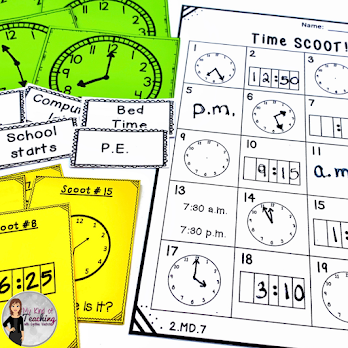
One of my favorite activities with these cards is a movement match-up game.  Each student gets either a clock card or a time card.  Then I set the timer and they have 1 minute to find their match.  At the end of each round, I do a quick check to make sure students are correctly matched.  Then I have them switch cards with someone in the room.  If they had a time card, they switch with a clock card and vice versa.  This makes sure that students practice both reading the time and reading the clock.  We play a few rounds of this game.  If the class is doing really well I might even challenge them to match up in less than one minute.  

Another favorite activity with these cards is playing an old-fashioned game of Concentration.  This is the perfect game to add to small groups and centers.  Since the cards are already made, it is super easy to set up too!  It is a fantastic way to review. 

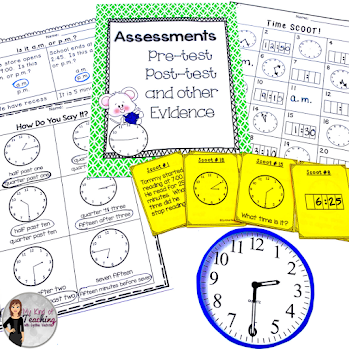
Use these pre test activities to get an accurate assessment of what your students already know. This way you can meet them where they are and plan your activities and lessons accordingly.
Pre-Test

I love to give pre-tests before beginning any unit. It's a great way to assess where my students are, identify any holes and correct any misunderstandings.  I use this information to plan my lessons and guide my instruction. It allows me to see what areas I really need to focus on and which areas they have already mastered. 

While I will always cover all the skills, some years we may move more quickly in a review style and other years the same concepts require more instruction.  

Plus, it's always fun to see how much they've grown at the end of the unit.  Having a solid pre-assessment is such a great way to collect data on skills and truly see what skills they have learned and mastered.

Let the Learning Begin

I love to use anchor charts as visual representations of vocabulary words and concepts that we will be learning.  These anchor charts give students important language, definitions, and an image to refer to.  During any given unit, our anchor charts remain posted in the class.   

Introducing new concepts for telling time is not only fun but also easy with these printable activities your students will absolutely love!
The anchor charts serve as great reference tools for my students to use throughout the unit. Sometimes I run them off for the students to have a copy in their notebooks. By giving students this reference tool, we are setting them up for success.  Not only do they have a tool to refer back to when they need a reminder, but we are also teaching them to take ownership of their learning.  Learning to find the answer instead of asking for the answer is an important skill they will use for the rest of their lives.

After introducing a skill we move right into practice.  I love to use the I do, we do, you do approach in my lessons.  I begin by modeling and talking through my thinking.  Then we do some practice together.  During this step, I transition from explaining what I'm doing to asking questions to allow students to explain their thinking.  Then we finish up with students working independently.  

Practice, Practice, Practice

Practice makes perfect! Use these super fun and engaging activities to get your students excited about practicing telling time in so many fun ways they will love.
This is where the magic happens. Telling time is one of those skills that requires a ton of practice to master the skills. I like to start slow and work on one skill at a time.  By doing this students can build on their previous learning and success to help them with new skills.

Practice activities take many different forms.  I like to keep our practice time feeling fresh so I mix it up by having my students work independently, with a partner, and in small groups.  We also do a variety of activities from hands-on sorting activities to games to practice worksheets.  It's this variety that really helps to reach the learning styles of all the students.

Once we have practiced one skill, then we start the process again with the next skill.  It's a little like this: Introduce, I Do, We Do, You Do, Repeat!

Craftivity

Our telling time unit is not complete without this fun and interactive craft. This is my favorite of the fun activities to teach telling time, and the students love it too!


Using fun hands on activities like a telling time craftivity watch craft are great ways to cement learning and keep your students feeling engaged and excited about telling time.
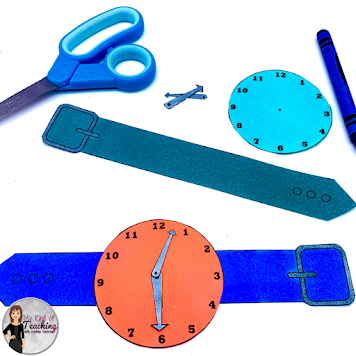
Each student gets to create their own watch!  This is something really special for them because most of my students don't have their own watch. The kids really get into it! 

I just run the watch pieces off on construction paper or colored cardstock to make them a little more durable. The kids cut out the pieces and put together their own watch.  I also let them personalize their watch band so that each one takes on its own personality. 

They love having their own watch to practice telling time on. I use the watch activity to review before we take our post-test.  During our telling time unit, students will keep their watches on their desks.  At random times throughout the day, I will say something like "it is 10:15.  Please show me that time on your watch."  Students will then manipulate their watch to show the time and hold it up.  

They really love the randomness of when I call out these times.  And sometimes, just for some giggles, I might say something like "it is . . . {long pause} . . . writing time."  There are usually lots of giggles as students were so sure they would be grabbing their watch.  

However, you use them, this hands-on, interactive craft is a great way to get students working with time.

Post-Test

When we have finished all of our telling time concepts, it is time to wrap up the unit with an assessment.  I usually give them the same test again that I used for the pre-test. This way it is an apples-to-apples comparison. You can really see their growth when comparing the two. I take the time to give my students each of their tests and let them see how far they've come as well. They really get into this, and it does wonders for their self-confidence. 

Save Time Teaching Telling Time

I hope you'll try these fun activities to teach telling time.  I've pulled all my favorite teaching tools, activities, and more into this Telling Time unit. If you'd like to save time, then you'll want to check out my Telling Time resource. It includes everything you need to teach telling time to the hour, half-hour, quarter-hour, and 5 minutes. You'll love all of the math activities and games included in the resource. It's great for 1st-3rd grade because you can use it as an introduction, to teach the lesson, and as a spiral review. 

These telling time activities are perfect for students in 2nd through 3rd grade who are ready to learn how to tell time beyond just identifying the hour. Packed full of fun activities, it's easy to differentiate and meet your students where they are in their telling time learning journey. Includes pre and post assessments to make your teacher life even easier!

Save it for Later

Be sure to save this pin to your favorite math Pinterest board. These fun activities to teach telling time are sure to be a class favorite.  Helping you save time with one unit to teach about time is just...


These telling time activities are perfect for students in 2nd through 3rd grade who are ready to learn how to tell time beyond just identifying the hour. Packed full of fun activities, it's easy to differentiate and meet your students where they are in their telling time learning journey. Includes pre and post assessments to make your teacher life even easier!

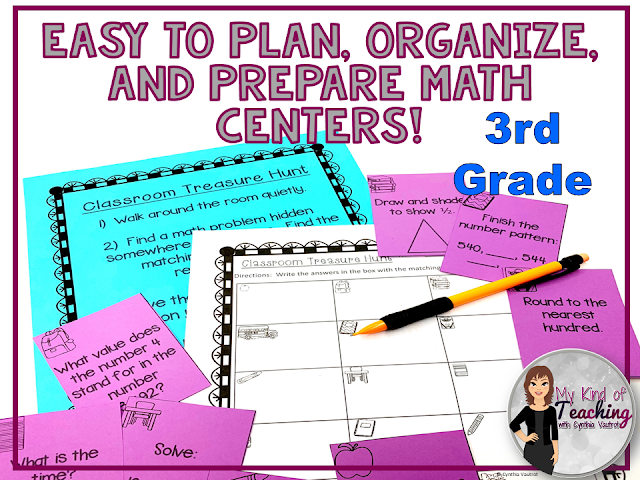
Math Centers that Are Easy to Plan, Organize, and Prepare

Are you looking for centers that are easy to plan, organize, and prepare?  

Keep reading to find math centers you can use all year in your classroom.  

Your life is about to get so much easier!


Choosing to keep the same centers all year long will lessen the amount of time you are spending to get the centers ready for students.  

Here are five centers to use in your classroom all year long.

1)  Technology

Use the technology that is available to you.  Whether this is a group of computers in your classrooms, a class set of Chromebooks or iPads, or something else, there is always a choice of things to use in this center.  You can use digital task cards or interactive games for students to practice current math skills or to review past math skills.

2)  Working with Numbers

This unit will work with any activity that involves numbers.  Include math games, activities, or worksheets in this center.  Using one of the No Prep math activities in this unit makes it super easy to prepare!

Super easy to prepare math games and activities to work with numbers

3)  Fact Fluency

It doesn't matter what grade level you teach, there is always fact fluency students need to practice.  Addition, subtraction, multiplication, and division need practice daily for students to become fluent.  Having a dedicated center will help students accomplish that goal, and it builds a foundation for everything else.  Games such as Bump, worksheets manipulatives, and other activities are good choices to add to this center all year.


4)  Writing/Word Work

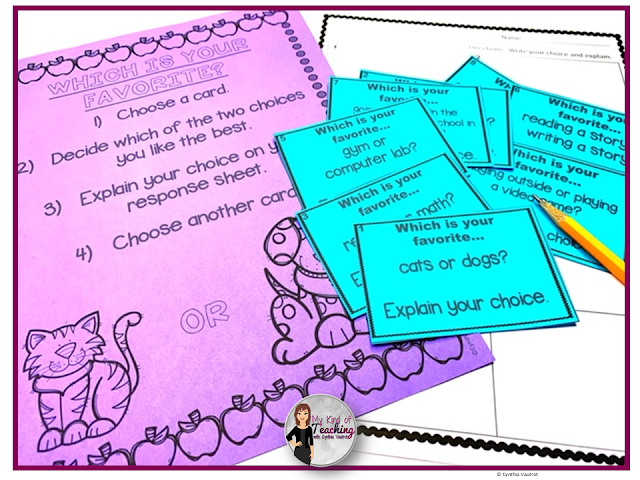
This math center is the perfect place to add some writing aspects to your math routine.  Students can write the steps to tell how to solve math problems, complete word problems, practice writing numbers, do constructed math problems, and more.  Writing is important for math, so make sure that you include it.

This math center is the perfect way to incorporate math with writing


5)  Math Games

Students love games.  I feel strongly about using games to learn.  Adding a play factor always helps students improve while they enjoy the activity.  Add board games that are already in your classroom.  Search the Internet for fun math games using a deck of playing cards.  Add math task cards to a Candy Land board, and watch how excited your students are to play.  
Math task cards can help learning fun and exciting


See more:


How do math centers look in your classroom?  Are they working for you?  Leave a comment below and tell me.


Helping you find simple solutions to big problems and lighten your load is just...


How Centers Transformed My Fourth Grade Classroom.

There was never a time when I didn't use centers.  Using centers in the classroom made sense to me from pre-k to kindergarten and then on to first and finally second grades.  There were so many benefits to using centers in the classroom!  One day, my principal then told me that she was moving me to fourth grade.  WH-A-A-A-A-T??????


I was very happy and content in the primary grades.  I had plenty of reasons to try and convince her that I didn't belong in upper elementary.  
  • I rarely used worksheets.
  • I taught whole lessons that were short and to the point.
  • I taught to my students' needs in small groups.
  • I used centers All. Day. Long!!
(I thought for sure that the last one would change her mind!!)

She just smiled at me and said, "That's EXACTLY why I am moving you!  I want the fourth graders to have just as much fun as your second grade students do!"

I spent the summer worrying. HOW could I replicate what I had always done in the lower grades for older students?

It turned out that it wasn't hard at all.

In fact, it was magical!

Grab FREE math and literacy centers by clicking HERE!

Examples of the math and literacy centers


No Prep Centers

I don't enjoy spending tons of time planning and writing lesson plans for someone else.  Teachers know what we are doing, right?

I studied the standards for 4th grade in both math and literacy and created a curriculum map and planned out my year.  (YES!  I loosely planned the entire year, and it saved me SO. MUCH. TIME!)

After I had my lesson plan calendar for the entire year in hand, I created centers that I could just print and go.

No prep divisibility cards


The students loved them, and they were sooooooo easy for me!

I planned out five literacy stations and five math stations I would use each week ALL YEAR LONG!

Instead of constantly coming up with new centers, I only had to change the activities.

It was SO easy!!  

Daily Math Spirals

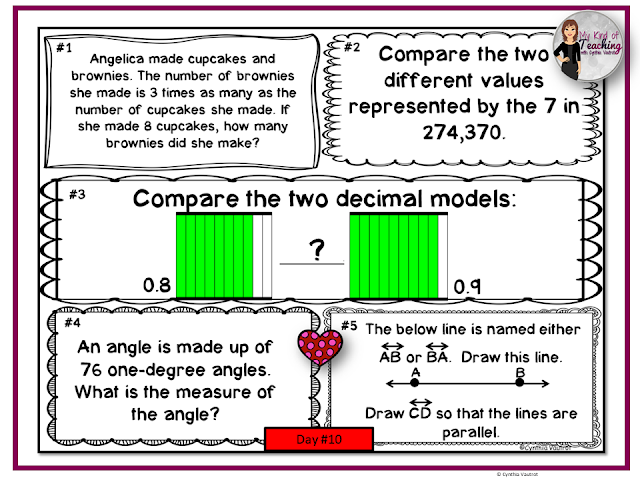
Each day before our daily focus in math, we completed five questions in a spiral.  These five questions covered the five big domains in Common Core.  By focusing on just these five, students were getting a review, present learning, and a preview of things to come.

Daily math spirals


By adding the preview component, I was able to do a mini lesson on the same standard/concept for 20 days.  By the time we actually reached that concept in our curriculum map, the students had been exposed to it so many times that it was a breeze to tighten down the learning!

I projected this math spiral on my big screen at the beginning of math class, and students completed the questions in a spiral notebook.  Again, there was no prep on my part with BIG results for the students.

We kept it fresh by sometimes working through the questions as a whole group, in small groups, with partners, or independently.

It was easy for me to print one page of questions and use in small groups when needed.

Using the daily math spirals allowed me to add a variety of activities to my math centers because I knew the students had already had exposure to the concepts.

You can find daily math spirals in my TpT store for second grade, third grade, and fourth grade.  

Centers, Centers, Centers

Instead of planning elaborate centers, I kept things very easy.  I used my NO PREP math centers and my NO PREP literacy centers and then filled in with things I already had in my classroom!

When the school became 1:1 in technology with Chromebooks, I added digital activities to the mix.

Digital activities for students. Shows the digital centers


My classroom was mostly a full day of centers.

For early finishers, I had them go to a center activity.

For small groups,  I pulled a center activity that students had already used from my no prep activities or they played a game that was used during center time.

For whole group, I used a center activity for the entire class as a teaching tool.  Turn it into a game, and change the entire dynamics!

These center activities were an important part of our day.

The Magic of Centers

There are so many benefits to using math and literacy centers during center time and throughout the day in many different ways!

No Prep Literacy Activities


1)  I was able to quickly utilize planning and writing in lesson plans.
2)  I wasn't constantly searching for new material to use.  I used the same activities over and over in my classroom.
3)  The center activities could be used over and over throughout the year in many different ways!
4)  While students were enjoying and learning during center time, I was able to fill in the gaps by utilizing small group teaching. 

Do you want to try out a few NO PREP math and literacy centers?  Click here to grab a few samples for FREE!


If you aren't using centers and center activities, you are missing out on one of the most fun and effective ways to teach and learn in your classroom!


If you want to return to this post later, just save this pin!

How to use centers pin


Using centers is just...